
Canyon Lake TX: Best Time to Pour Concrete in Hill Country
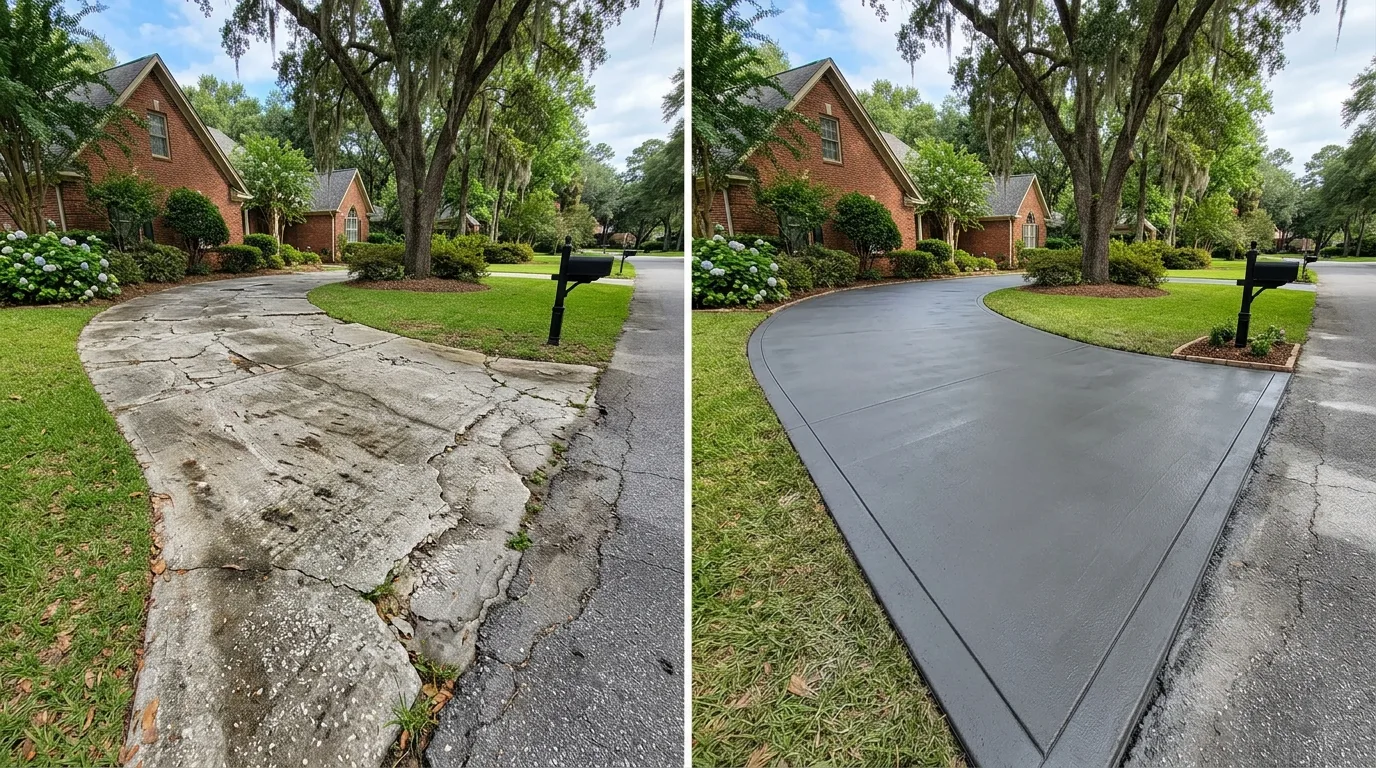
If you’ve tried to schedule concrete work in Canyon Lake during July, you already know the problem: the crew pours in the morning, the Texas sun bakes the surface by noon, and you’re left watching hairline cracks appear before the slab even finishes curing. Concrete placement timing matters more in the Texas Hill Country than in almost any other region — and getting it right is the difference between a driveway that lasts 40 years and one that needs repair in five. In this guide, we cover every season’s pros and cons for concrete work in Canyon Lake, TX.
Schedule Your Canyon Lake Concrete Project
Canyon Lake Concrete Pros times every pour for optimal curing conditions — call (888) 376-0955 to check availability.
Why Timing Matters More in Canyon Lake Than Most Markets
Concrete curing is a chemical process (hydration) that produces the strongest results between 50–75°F. Canyon Lake’s humid subtropical climate pushes well outside this range in both directions. August highs average 94°F with sun exposure that can raise surface temperatures 40–50°F above ambient — meaning concrete poured at noon in summer may experience surface temperatures near 140°F. Meanwhile, January lows average 39°F, occasionally dipping below freezing overnight. Both extremes require technique adjustments; both are manageable with an experienced crew.
The other Canyon Lake-specific factor is soil moisture. Comal County’s expansive clay absorbs Canyon Lake’s 37.44” of annual precipitation and swells — which means concrete poured on saturated subgrade will experience immediate differential settlement as the soil dries and contracts beneath the new slab. Timing pours for periods when soil moisture is stable, not at seasonal extremes, reduces this risk.
Spring (March–May): The Best Window
Spring is the ideal season for concrete work in Canyon Lake. Daytime temperatures typically stay in the 65–80°F range throughout March and April, with moderate humidity that slows surface drying to a pace that allows the interior of the slab to hydrate properly. Lower evaporation rates during spring curing consistently produce stronger concrete with fewer surface defects than summer pours of identical mix design.
Soil moisture in spring tends to be relatively stable — the winter rains have passed and the intense summer dry spells haven’t begun. This means Comal County’s clay subgrade is at an intermediate moisture level rather than swollen or shrunken, producing more consistent support beneath the new slab during the critical early curing period.
The key caveat: May is Canyon Lake’s rainiest month at 4.20” average. We watch forecasts closely in late spring and avoid scheduling within 24 hours of significant rain — concrete poured before a heavy rain event can be surface-damaged by rainfall that hits before the slab is firm enough to resist impact.
Summer (June–August): Manageable With Technique
Canyon Lake’s summer peaks — 90–94°F in July and August — don’t make concrete work impossible, but they require specific adjustments that not all crews are equipped to make. The fundamental challenge is that hot weather accelerates the concrete’s hydration rate, which shortens the working time (the window for placing, finishing, and jointing) and increases the risk of plastic shrinkage cracking from rapid surface moisture loss.
Effective summer concrete techniques for Canyon Lake:
- Schedule pours before sunrise. Starting at 5–6 AM allows placement and finishing to complete before the worst heat. Most of the day’s work is done by 10 AM when surface temperatures begin to spike.
- Use a retarder admixture. Chemical retarders slow the set rate, buying additional working time that the heat takes away.
- Shade the fresh slab. On large pours like driveways and slabs, a temporary shade structure over the finishing area reduces surface temperature significantly.
- Wet cure aggressively. Applying burlap and keeping it damp for the first 3–7 days after a summer pour dramatically reduces surface cracking from moisture loss.
- Avoid afternoon pours. Concrete placed at 2 PM with an ambient temperature of 92°F is a recipe for surface problems.
Summer scheduling in Canyon Lake is also competitive — contractor availability is often tightest from June through August when homeowners rush to complete projects before the heat sets in. Booking in March for a May pour avoids both the worst heat and the schedule crunch.
Fall (September–November): Almost as Good as Spring
September through November is the second-best window for concrete work in Canyon Lake. Once the summer heat breaks in September, temperatures moderate quickly — by October, daytime highs are typically in the 70s°F. October is also Canyon Lake’s wettest month at 4.30” average, so rain scheduling is the main consideration.
Fall concrete has one advantage over spring: the summer heat has dried Canyon Lake’s clay soil to its seasonal low moisture level. Pouring on drier clay creates less immediate differential settlement risk than pouring on saturated spring soil, though the clay will reabsorb moisture over the following rainy season and exert upward pressure on the cured slab — which is why proper base prep and expansion joints matter regardless of season.
October and November often see excellent contractor availability and responsive pricing compared to summer’s peak demand period. This is also the ideal time to complete driveway or patio projects before the holiday season, when home entertaining is most active.
Winter (December–February): Cold Limits Timing
Canyon Lake’s winters are mild by Texas standards — most days remain above 50°F — but January lows average 39°F and overnight freezes occur. Concrete placed when ground or air temperature is below 40°F stops hydrating; the result is a slab that has formed but not gained adequate strength, which creates long-term durability problems.
Most crack fill and small repair work can be done throughout Canyon Lake’s winter as long as overnight temperatures stay above 40°F. Full driveway and slab pours require monitoring the 5-day forecast and confirming that overnight temps won’t drop below freezing during the first three days after the pour. Cold-weather concrete mixes (with accelerators and reduced water) and insulating blankets extend the viable winter pour window in Canyon Lake’s climate, though not indefinitely.
The practical winter opportunity: minor repairs and project planning. Use winter months to schedule spring concrete projects — the best crews in the New Braunfels, Bulverde, and Canyon Lake area fill their spring calendars by January.
How It Works in Practice
Experienced Canyon Lake concrete contractors don’t pick a calendar date and hope for the best — they watch a rolling 10-day forecast for temperature, rain probability, and overnight low. A project scheduled for March may get moved two days when a cold front is forecast; an August pour gets bumped from afternoon to predawn start. The key variables we monitor are: ambient temperature at pour time, forecast high for the day, 3-day rainfall probability, and overnight low for the first 72 hours.
Clay soil moisture is harder to forecast precisely, but we assess subgrade conditions on the day of the pour — if the soil is saturated from recent heavy rain, we reschedule rather than pour on compromised base conditions.
Frequently Asked Questions
Can concrete be poured in Canyon Lake’s summer heat?
Yes, but it requires experienced crews and specific techniques — early-morning scheduling, retarder admixtures, aggressive wet curing, and shade over the finishing area. A summer pour done correctly produces excellent concrete; done without heat mitigation, it produces surface cracking and reduced long-term durability. We schedule all summer pours for pre-sunrise start times.
What happens if it rains on fresh concrete in Canyon Lake?
Light rain after the concrete has firmed enough to not be affected (typically 4–8 hours after the pour) is not a problem. Heavy rain within the first 2–4 hours can pit the surface, dilute the cement paste, and reduce surface strength. We monitor forecasts and avoid pours when significant rain is within 12–24 hours of the scheduled time.
Is a fall concrete pour better for Canyon Lake’s clay soil?
Fall is excellent for concrete placement in Canyon Lake — moderate temperatures and somewhat drier clay subgrade are both advantages. October’s higher rainfall requires careful scheduling around forecasts. See our guide on concrete driveway cost in Canyon Lake for the full picture of what drives project quality and price.
Ready to Schedule Your Canyon Lake Concrete Project?
Call Canyon Lake Concrete Pros at (888) 376-0955 — we'll recommend the optimal timing for your project based on your schedule and the season.
Related: